Digital Marketing
How Pakistani Brands Are Using Meta, Google and TikTok Differently in 2026
Pakistani brands are no longer using Meta, Google and TikTok in the same way. In 2026, Meta is increasingly focused on demand generation and retargeting, Google on intent and conversion, and TikTok on discovery, creators and cultural relevance.
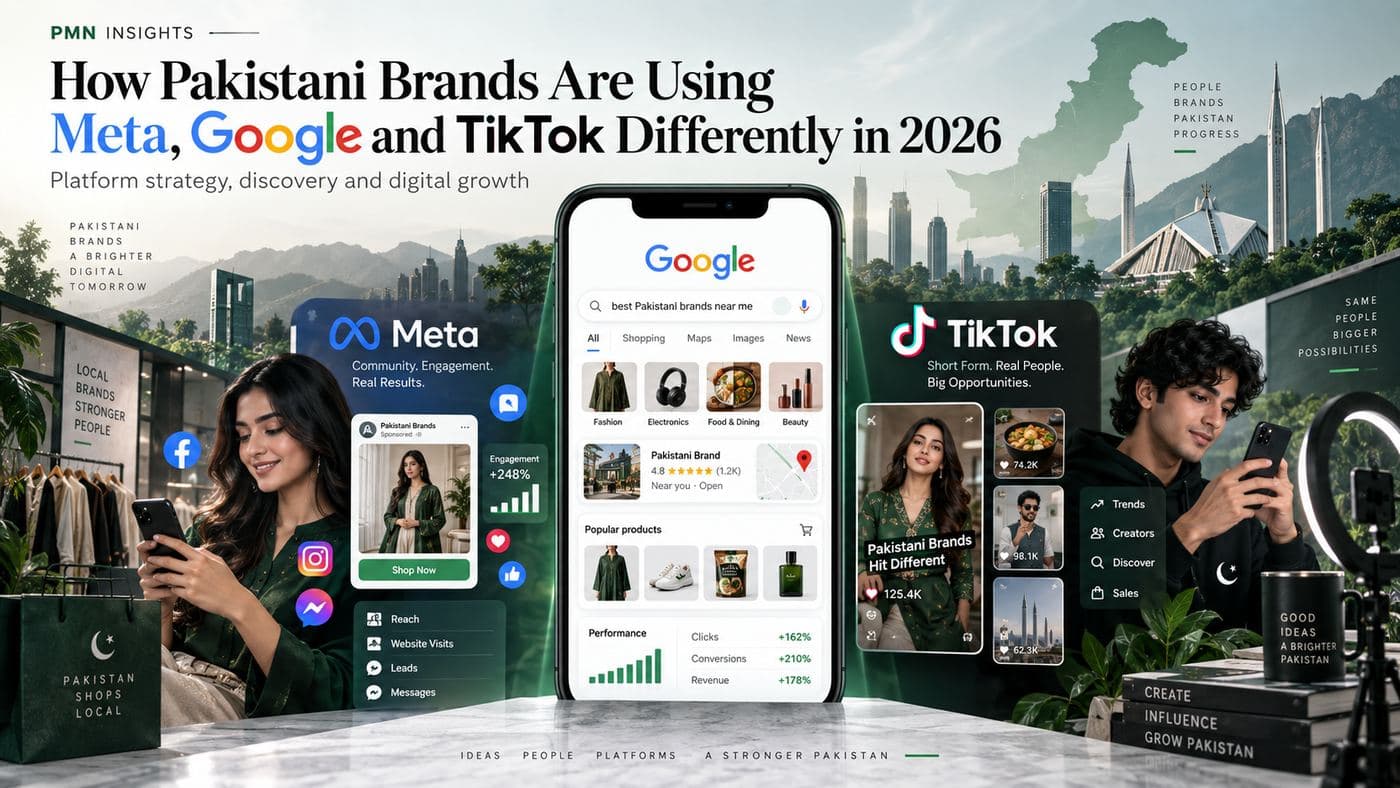
Pakistan’s digital marketing landscape is becoming more specialised.
For years, many brands followed a simple approach: run content on Facebook and Instagram, support it with Google Search, and use TikTok mainly for younger audiences.
In 2026, that strategy is changing.
The strongest brands are beginning to understand that each platform plays a different role in the customer journey.
Meta: Creating and Converting Demand
Meta remains one of the strongest platforms for Pakistani consumer brands because users do not need to be actively searching for a product.
A consumer can discover a clothing brand, restaurant, skincare product or promotion while scrolling through Facebook or Instagram.
That makes Meta particularly effective for demand generation, retargeting and social commerce.
For Pakistani advertisers, the platform also works well because journeys often move from an ad into a website, Instagram message or WhatsApp conversation.
As Meta increasingly automates targeting through AI-powered advertising tools, competitive advantage is also shifting toward better creatives, stronger offers and better conversion tracking.
Google: Capturing Existing Intent
Google serves a very different purpose.
When someone searches for “best cake shop Islamabad,” “solar panels Lahore price” or “buy running shoes Pakistan,” they are already expressing a need.
That makes Google especially valuable for high-intent categories such as:
- Automotive
- Real estate
- Education
- Electronics
- Travel
- Financial services
- Ecommerce
The opportunity is less about creating interest and more about being visible at the moment consumers are ready to research or buy.
For marketers, this also means accurate conversion tracking is becoming increasingly important as Google relies more heavily on automated bidding and machine learning.
TikTok: Discovery and Culture
TikTok’s role is different again.
Consumers often open TikTok without knowing exactly what they want to see.
The algorithm decides what they discover.
That makes TikTok particularly powerful for brand discovery, creators, trends and cultural relevance.
Content that performs well typically feels native to the platform: reviews, demonstrations, humour, transformations, storytelling and creator-led videos.
Traditional advertisements simply resized for TikTok are less likely to perform as effectively as content designed specifically for short-form viewing.
TikTok is also becoming more important as a search environment, particularly among younger audiences looking for restaurants, products, experiences and recommendations.
One Platform Strategy No Longer Works
The biggest mistake brands can make is publishing the same creative everywhere.
Meta, Google and TikTok may appear on the same smartphone, but users behave differently on each platform.
A simple way to understand the difference is:
Meta: “I wasn’t looking for this, but I’m interested.”
Google: “I need this. Help me find it.”
TikTok: “Show me something interesting.”
The best digital strategies in Pakistan are therefore moving away from Meta vs Google vs TikTok.
Instead, marketers are learning to use all three together — with each platform doing a different job.
PMN Insight
In 2026, platform strategy matters more than platform presence.
Meta creates and nurtures demand. Google captures intent. TikTok drives discovery and cultural momentum.
Pakistani brands that understand those differences are far more likely to build efficient, connected digital marketing funnels.