Marketing & Industry News
Pakistan Wants to Build Global Brands: Inside the New APTMA–CAP Collaboration
Pakistan has long been one of the world’s major textile manufacturing hubs, but much of the value in the global apparel business is created beyond manufacturing. A new collaboration between APTMA and the Chainstores Association of Pakistan could signal a shift from simply producing for international brands to building Pakistani brands capable of competing globally.
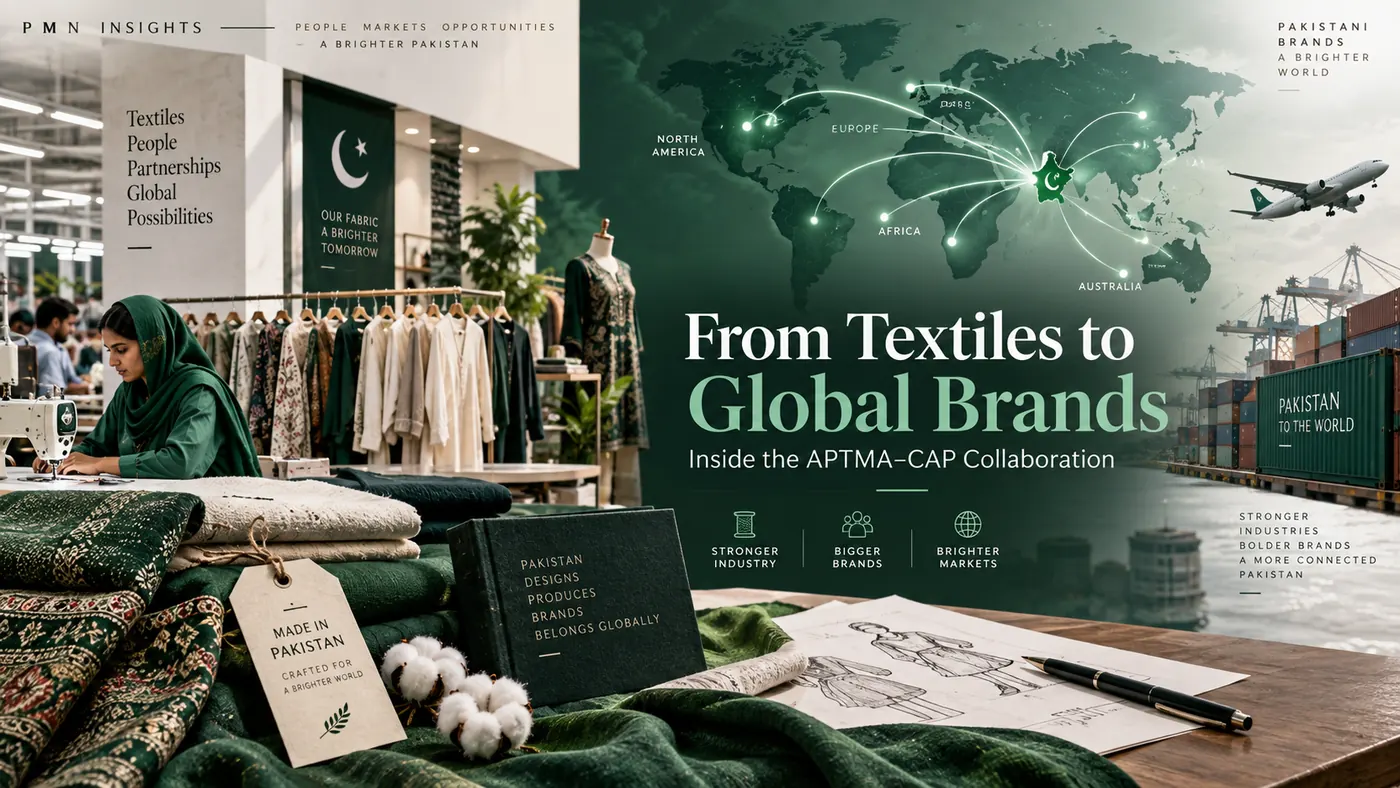
Pakistan has spent decades building its reputation as a major manufacturing base for textiles and apparel.
Now, an important question is beginning to receive greater attention:
What if Pakistan exported not only products — but brands?
The All Pakistan Textile Mills Association (APTMA) and the Chainstores Association of Pakistan (CAP) have agreed to collaborate on developing and promoting Pakistani textile and apparel brands in international markets.
The development could represent an important shift in how Pakistan thinks about its export economy — moving further down the value chain from manufacturing towards product development, design, branding, marketing and retail.
For Pakistan’s marketing and retail industry, the opportunity is significant.
From Manufacturing Products to Owning Brands
Pakistan already manufactures textiles and apparel for customers around the world.
But manufacturing is only one part of the economic value created when a consumer buys a finished fashion product.
During discussions between APTMA and CAP, CAP Patron Tariq Mehboob highlighted that manufacturing can represent less than 30% of the final retail value of a typical apparel product, while areas such as product development, design, branding, marketing and management can account for a much larger share of the value.
That distinction matters.
Imagine a product manufactured in Pakistan and sold internationally under another company's brand.
Pakistan benefits from manufacturing revenue.
But the company that owns the customer relationship, brand identity, retail network, marketing ecosystem and intellectual property may capture a significantly larger share of the final selling price.
Building internationally recognised Pakistani brands therefore presents a different economic opportunity.
Instead of competing primarily on production capability and cost, Pakistani companies could increasingly compete on:
- Brand equity
- Product innovation
- Design
- Consumer experience
- Distribution
- Digital commerce
- Marketing
- Retail
That is a very different business model.
And potentially a much more valuable one.
Pakistan Already Has a Growing Retail Brand Ecosystem
Pakistan is not starting from zero.
According to CAP Chairman Asfandyar Farrukh, Pakistan's retail market is estimated at roughly Rs3 trillion and employs millions of people.
The country also has more than 50 apparel and garment brands serving consumers across eastern and western fashion categories.
The CAP delegation participating in the discussions included representatives associated with brands and retailers such as Royal Tag, HUB, Maria.B, Charcoal, Limelight, Unze London, Zara Shahjahan, Tesoro, Rollover, Uniworth and Khas Stores, among others.
Many Pakistani fashion businesses have already built significant consumer recognition locally.
The next challenge is taking that capability into international markets at scale.
The Diaspora Could Be Pakistan's Starting Point
One of the most interesting elements of the APTMA–CAP discussion was the potential role of the Pakistani and South Asian diaspora.
APTMA Chairman Asad Shafi pointed towards large Pakistani and South Asian populations across the United Kingdom, Europe, North America and Oceania as a natural consumer base for Pakistani apparel, fashion and lifestyle brands.
For marketers, this makes strategic sense.
Building a brand internationally is expensive.
Customer acquisition, retail infrastructure, distribution, logistics and awareness-building can all require substantial investment.
Diaspora communities provide Pakistani brands with a potentially easier entry point because many consumers already understand the products, cultural context and categories being offered.
The opportunity would then be to move beyond diaspora audiences.
That is where the real transformation would occur.
A Pakistani fashion label becoming successful among Pakistanis living in London is valuable.
A Pakistani fashion label becoming relevant to consumers across London regardless of ethnicity is something much bigger.
Pakistani Brands Need More Than Good Products
Pakistan's manufacturing capability alone will not automatically create international brands.
Successful global brands are built through a combination of product quality and sophisticated marketing.
That means Pakistani companies hoping to expand internationally will need to develop capabilities around areas including:
Brand positioning
International consumers need a clear reason to choose a Pakistani brand over hundreds of alternatives.
Consumer insight
Brands must understand the lifestyles, motivations and expectations of consumers in each target market.
Distinctive brand identity
Products increasingly compete through storytelling, design, packaging and cultural relevance — not specifications alone.
Digital customer acquisition
Platforms such as Google, Meta, TikTok and marketplaces can provide Pakistani brands with an international route to consumers without immediately building massive physical retail networks.
Customer experience
International expansion requires everything from delivery and returns to customer service and payment experiences to meet local expectations.
Consistency
Perhaps most importantly, brands need consistency across product quality, communication, retail and customer experience.
Exporting products and building brands are therefore two very different disciplines.
The Policy Environment Will Matter
APTMA and CAP also highlighted several structural issues that could determine whether Pakistani brands can realistically expand internationally.
The discussions called for a policy framework supporting areas including:
- Overseas retail operations
- International warehousing
- Global marketing and brand development
- E-commerce
- Digital payments
- Simplified foreign exchange regulations for companies establishing international distribution and retail operations
These are not minor issues.
A Pakistani business attempting international expansion needs the ability to spend money overseas, operate warehouses, invest in marketing, receive payments and establish distribution infrastructure.
Without an ecosystem that enables those activities, global brand expansion becomes significantly harder.
Why This Matters for Pakistan's Marketing Industry
There is another dimension to this development that deserves attention.
If Pakistani businesses increasingly move from being manufacturers to brand owners, the importance of professional marketing will rise significantly.
Export manufacturing is largely business-to-business.
Global brand building is fundamentally consumer-driven.
It requires:
- Brand strategists
- Creative agencies
- Consumer researchers
- Performance marketers
- E-commerce specialists
- Retail designers
- Content creators
- PR professionals
- Data analysts
- Customer experience teams
In other words, the internationalisation of Pakistani brands could create opportunities not only for textile companies but for Pakistan's entire marketing and creative economy.
Marketing stops being viewed simply as a promotional expense.
It becomes part of the value creation engine.
Pakistan Has Seen This Model Work Elsewhere
Some of the world's most successful export economies eventually moved beyond manufacturing.
Countries can begin by producing goods for international companies, develop manufacturing expertise and supply chains, and later create businesses that capture more value through their own products and brands.
Pakistan has many of the ingredients required to pursue a similar path in textiles.
It has manufacturing capability.
It has a large domestic consumer market.
It has experienced retailers.
It has designers.
It has rapidly developing digital commerce capabilities.
And importantly, it has millions of potential consumers of Pakistani and South Asian origin living internationally.
The challenge is connecting those pieces.
From “Made in Pakistan” to “Brand from Pakistan”
For decades, discussions around Pakistan's textile industry have understandably focused on exports, manufacturing capacity and competitiveness.
But there is a much bigger prize available.
A factory earns revenue every time it manufactures a product.
A powerful brand creates value through every consumer who recognises, prefers and repeatedly purchases that product.
The APTMA–CAP collaboration therefore represents more than another industry meeting.
It reflects a potentially important change in ambition.
Pakistan does not necessarily have to remain hidden behind the labels of international companies.
It can manufacture products.
It can design them.
It can market them.
And ultimately, it can own the brands consumers around the world choose to buy.
If Pakistan succeeds in making that transition, the country's next major textile export story may not simply be about how many garments it produced.
It may be about how many Pakistani brands the world learned to recognise.
PMN Insight
Pakistan's manufacturing strength has already earned it a place in global textile supply chains. The next opportunity is capturing more of the value created after manufacturing — through design, innovation, marketing, retail and brand ownership.
For Pakistan's marketers, that means something particularly important:
The country's export ambitions may increasingly depend on marketing capability just as much as manufacturing capability.